
A better way to explain train carbon footprint estimates
Train emissions are low, but carbon footprint estimates should be transparent about assumptions, data quality and how passenger shares are allocated.
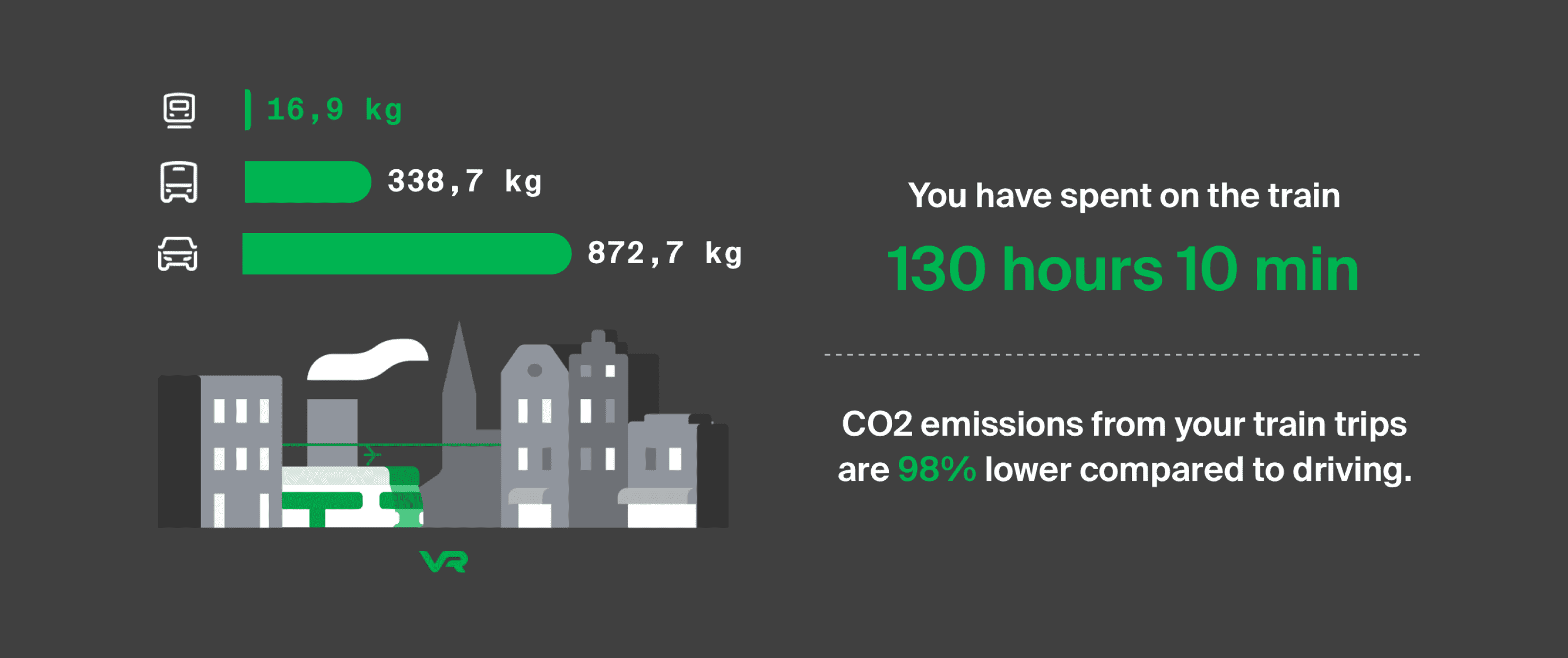
Train emissions are low, but the estimate still matters
Train travel is usually one of the lowest-emission ways to move between cities, especially in countries where rail electricity is relatively clean. That does not mean every carbon footprint number shown to passengers is automatically precise.
A passenger-facing estimate should be honest about what it measures. Is it using an average emissions factor? Is it based on the route, train type, load factor and energy mix? Is it a rough comparison with car and bus travel, or is it being presented as a personal carbon footprint for a specific journey?
That distinction matters. If an app asks passengers to compare, compensate or pay based on emissions, the calculation should be transparent enough to trust.
The problem with one fixed number
Many transport interfaces use simple emissions factors: a number per kilometre for cars, buses or trains. This is useful for quick comparison, but it can become misleading when it is shown as if it were exact.
A fixed number ignores important changes: train type, electricity source, occupancy, route profile, distance, replacement traffic, disruption handling and whether the data source is current. It can also hide the difference between a service-level estimate and a passenger-level allocation.
The better product decision is not to remove carbon information. The better decision is to label it clearly: estimated, average, route-based or real-time where supported.
What a stronger method should include
A better carbon calculation model should start from operational data, then explain what is known and what is assumed.
Useful inputs include train category, route distance, energy source, typical or measured consumption, estimated passenger load, service pattern and the emissions factor for the energy used. Where live operational data is not available, the interface should say so and use a documented average.
For passenger allocation, passenger-kilometres are usually a clearer basis than pretending to know the exact individual impact of every traveller. A simple allocation can divide the journey emissions by total passenger-kilometres, then assign a share based on the distance each passenger travels.
That keeps the estimate practical without collecting unnecessary personal data.
A practical formula
A transparent model can be explained in plain language.
- Journey emissions = energy used for the service x emissions factor of the energy.
- Passenger-kilometres = sum of passenger distance travelled across the service.
- Passenger share = journey emissions x passenger distance / total passenger-kilometres.
If the system has better data, it can improve the estimate by segment. For example, it can calculate emissions between stops and allocate each segment to the passengers on board during that segment.
The important point is not that every consumer app needs a complex physics engine. The important point is that the estimate should match the quality of the available data.
What should be shown to passengers
A useful passenger interface can show a simple number, but it should also show the confidence level behind it.
- Average estimate: based on published transport factors.
- Route estimate: based on distance, train type and expected load.
- Live estimate: based on current operational data where available.
This gives passengers a clearer mental model. They can still see that trains are a low-emission choice, but they are not misled into thinking a broad average is a precise personal measurement.
Why this matters for trust
Carbon information can help passengers understand the environmental value of rail travel. It can also support public agencies, operators and travel services when they communicate climate impact.
But the trust comes from clarity. If the calculation is approximate, say it is approximate. If the data is old, update it or label it. If the number is suitable for comparison but not compensation pricing, say that too.
The best rail carbon footprint product is not the one with the most dramatic number. It is the one that helps passengers understand the estimate, the assumptions behind it and why train travel remains a strong lower-emission choice.